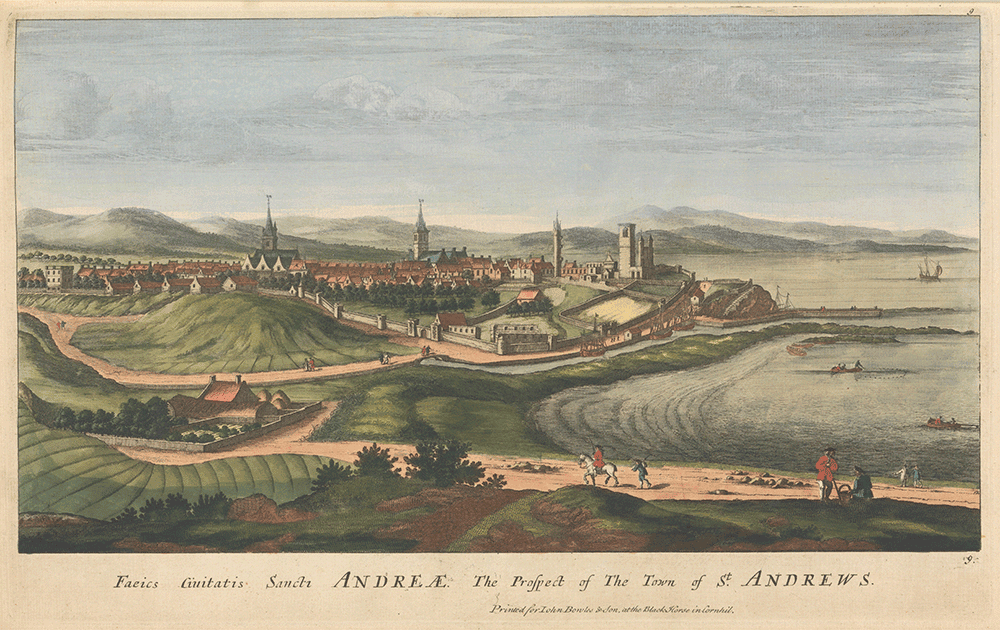
Over the course of the last few weeks, I have noticed a subtle shift in the posters displayed around our village in north-east Scotland, advertising everything from the opening of a new curry house to fundraising events for new Christmas lights. Posters are a standard feature of any small community, but what stood out about these was that they were all AI-generated. They all carry that distinct polished, sleek aesthetic that is characteristic of AI – difficult to define precisely, but unmistakably artificial.
When fear whispers that it’s safer to stay quiet, true Spirit-primed conviction demands a voice.
In this video, I briefly explore what it really means to speak boldly into the darkness—confronting the terrifying thought of the lost not with hesitation, but with unyielding resolve.
Watch the full conversation below, and join the discussion in the comments.
Gloria Steinem passed away this summer and was hailed as an icon of the women’s feminist movement. She was praised for her many endeavours over the course of her life, with one of her defining legacies framed as her fight for “women’s reproductive rights”. The use of this phrase is particularly revealing, because the word…
I want to start by saying something that will surprise regular readers: Alex’s letter is not, in itself, the problem. It appears to be more careful, more courteous, and more genuinely wrestling with Scripture than many an angry elder (or cowardly YouTube commentator) that I’ve handled elsewhere.1 He quotes the wonderful Samuel Rutherford rather than openly raging, (though I suspect that same rage is lurking just below his surface). He says he sympathises with my burdens, (to whatever extent that sympathy reaches), which is worth acknowledging before I say anything else.
But courtesy is not the same as having done the work, and sincerity is not the same as engagement. And so I want to explain, publicly and just this once, why I am not going to write Alex a private, bespoke, point-by-point reply — and why that refusal is not evasion but defiant consistency.
The pattern is always the same. Someone watches several videos. They read “some content” — those words which gloss over a great deal of unacknowledged work. They form an impression, sometimes an accurate one, often not, and then they write to ask me to do, personally and for free, what I have already done publicly and at length: in three books, in a Q&A chapter that anticipates almost this exact list of objections, and in years of podcasting and blog writing.2
Watching a video clip is not the same as reading. A clip shows you a sunrise and a soundbite; a book shows you the argument, the exegesis, the qualifications, and — critically — the answers to the very questions being asked of me now. God Closed Church closes its central chapter with a section titled “Some Common & Much-needed Q&A,” built entirely from real correspondence with men who raised concerns almost identical to Alex’s.3 If Alex’s questions are sincere, that chapter, and my wider writing, is where sincerity leads but not to my inbox.
I do not owe every viewer of a ten-minute video a private tutorial in exchange for their attention. I owe to the Lord Himself the witness He has formed in me, communicated boldly. That is what the books are.
What Alex Is Actually Saying
In fairness to him, let me lay out the substance of his letter plainly, because it deserves a plain response even if not a private one:
He notes I hold to continuationism and otherwise sit within conservative evangelicalism, yet remain dissatisfied with its modern expressions.
He understands me to teach that the covid-19 church closures were a form of divine judgment — a “merciful” one.
He references my rebuke of the Banner of Truth for not, in his reading, sufficiently calling for repentance.
He believes I teach that Hebrews 10:25 has been misapplied — that it concerns the eschatological gathering at Christ’s return rather than a weekly command to attend a building.
His chief concern: that this amounts to calling Christians out of their local churches into a kind of exile, and that this is “extreme separatism” — with the practical worry that an isolated believer, alone, has no means of feeding himself, and that “lone wolf” Christians will use my teaching as cover for rejecting all fellowship.
He closes by saying the content feels doctrinally vague, weighted toward anecdote over substance, and cites Rutherford’s warning against Brownist separatism — the sin of looking for a ‘perfect’ visible Church.
That is a fair summary, and it is worth answering — not privately, but here, where it can serve every Alex, not just this one.
The Very Bad Figs, and the Charge of Vagueness
Here is the irony: the charge of vagueness always arrives from people who have not read the chapter where the boundary lines have been drawn with the greatest precision.
In God Closed Church I spend an entire chapter — “Two Baskets of Figs” — on Jeremiah 24. Jeremiah saw two baskets at the Temple: one of very good figs, one of figs so rotten they weren’t fit to be picked up, let alone fit for human consumption. The shock of the passage is not the badness of the bad figs. It is who they were. The bad figs were not the exiles. The bad figs were the ones who stayed — the most religiously zealous, the most doctrinally sound-sounding, the most confident that their continued Temple attendance proved their fidelity. The good figs, the ones on whom the LORD set His eyes for good, were those who bowed their heads and went into exile in obedience to His judgment.4
So when Alex says my teaching feels light on substantial doctrine, I’d ask him pointedly: has he read that chapter? Because “vague” is very rarely what critics mean. What they usually mean is unwelcome — a claim that reorders where the danger actually lies, and that is uncomfortable regardless of how carefully it’s argued.
And here is where Alex’s own letter, without meaning to, supplies the evidence for the very chapter he hasn’t read. He grants, almost in passing, that he “sympathises with a lot of my burdens” about the state of the church — one sentence, quickly moved past on the way to his real concern, which is that I am harming the harassed and helpless, not helping them, and therefore dishonouring the LORD Whose Name is Jealous. This is exactly what Alex is saying.
But that is precisely the posture of the very bad figs: a nodding acknowledgement of the rot, offered without cost, followed immediately by a defence of staying put. It is not the same thing as bowing one’s head to the ground. The good figs in Jeremiah 24 did not footnote their concession and move on; they bowed, wept and felt the weight of what their own unfaithfulness had cost. A sentence of sympathy sandwiched between a list of accusations is not biblical lament. It is the “very bad fig” instinct still standing upright, dressed in the language of concern.
Systemic Ills, Not Anecdote
Alex’s other worry — that this is anecdote dressed as doctrine — deserves the same answer from a different book. The Glorious Few names something I call the Abedi Inversion: the systemic process by which the Church’s own de-radicalisation of genuine discipleship gets mistaken for health, while the actually radical — the “very few” who take Christ’s claims at full weight — get mistaken for the danger.5 The whole burden of that book is that this is not one bad experience generalised into a theory. It is a systemic diagnosis, argued from Scripture, with specific reference to John the Baptist, and the wider biblical pattern of counterfeit versus authentic radicalisation laid out in detail.
A critic who has watched two videos has not read the argument, and has therefore not earned the standing to call it anecdotal. That is not a limitation of what I am saying but rather a limitation of the critique; and it is not mine to solve on his behalf, in a private email, on his timescale.
The Actual Answer to the Lone-Wolf Concern
I will give Alex this much directly, because it’s the one part of his letter that isn’t answered by “go and read”: no, I am not commending isolated, unaccountable, self-feeding Christianity, and anyone using my work to justify that has misused it. The confession Mairi and I published this year says plainly that departure from unfaithfulness must still eagerly desire the gathering — the means of grace, the safeguards of fellowship — even while separating from infidelity (Psalm 106:47 makes the longing explicit).6 Real exile, biblically, is never solitary by design and certainly not by preference; it is a people bowing their heads together, not a man alone with a laptop declaring independence from the Body of Christ.
Samuel Rutherford’s warning against Brownist separatism is fair game to raise — but it assumes the church in question has “faults,” not systemic apostasy. That is precisely the distinction our confession draws, at length, between tolerable imperfection and the kind of doctrinal gangrene that Paul told Timothy to cut away rather than live alongside.7 Rutherford wasn’t writing to a church with gangrene. Read carefully, he isn’t actually the objection to my position; he’s assuming the very distinction my position depends on.
Rutherford’s warning presupposes a world with one ‘mother kirk’ and functioning courts capable of distinguishing tolerable fault from disqualifying error — a mechanism we no longer have across today’s fractured, mutually contradictory denominational landscape. Applied literally now, his rule would demand loyalty to an ecclesiology that no longer exists — and it’s worth remembering that Rutherford himself, a Covenanter who wrote Lex, Rex in defence of resisting corrupted authority, spent his life distinguishing imperfection to be endured from corruption to be resisted, not counselling passive endurance of whatever church order one is handed. Conscripting him as a blanket argument against departure asks him to contradict his own life’s work.
No Lament, No Urgency
There is a further reason I won’t be taking this up privately with Alex, and it is not primarily about doctrine. It’s about tone — or rather, about what tone reveals.
I have written before about the “gut-wrenched anguish of Jeremiah” that these conversations produce in me — not because disagreement wounds me, but because of what entrenched spiritual deception costs the Church.8 I have lost friendships, my livelihood, and my wife’s livelihood over this conviction, and I have wept over all three. Every serious correspondent I engage with — the ones who’ve actually left, who write to me from genuine exile, often alone, often grieving — writes with that same anguish. There is weeping in their emails. There is a felt sense that the hour is late and that something precious has been lost.
Alex’s letter, for all its courtesy, has none of that. It reads like a checklist: doctrine confirmed here, concern flagged there. There is no lament in it — no sense that the state of the Church he “sympathises” with actually grieves him. And that absence is not a small thing, because it is precisely the same absence I meet from institutional voices who treat the thousands who have left — often at enormous personal cost, often into painful isolation not of their own design — as a problem to be managed rather than people to be wept over. Alex’s letter belittles them without ever mentioning them: every “lone wolf” jibe, every worry about the dangers of departure, is aimed at real people who left with tears, not swagger, and who are patronised by precisely this kind of calm, undisturbed correspondence from within the institution they left.
I will engage at length with anyone who writes to me the way Jeremiah wrote — anguished, urgent, willing to be wrong. I have far less to say to a list of concerns that arrives dry-eyed.
Where This Leaves Us
If Alex wants the fuller answer to any of this — the exegesis, the qualifications, the pastoral safeguards, the eschatological framework — it is written, at length, anticipating almost exactly his list. The books exist so that I don’t have to re-litigate the same ground privately with every sincere questioner who found me through a video rather than a bookshop.
I’m glad Alex is asking sincere questions rather than raging. But sincerity earns a public, permanent answer that will serve him and everyone like him — not a private essay written for an audience of one who hasn’t yet opened the book.
Read the chapter. Read the confession. Then, if questions remain, perhaps we can talk; but it is to be a talking only through tears.
Come and weep with us, Alex; until then, as the Scot Rutherford could have said, “Haud yer wheesht.”
Notes
God Closed Church, ch. 4, “Two Baskets of Figs.”
God Closed Church, “Some Common & Much-needed Q&A.”
Ibid.
God Closed Church, ch. 4, on Jeremiah 24:1–6.
The Glorious Few, ch. 1, “The Abedi Inversion.”
“A Confession for Faithfulness to Jesus Christ in a Period of 21st-Century Church Apostasy,” firebrandnotes.com, 4 February 2026.
“An Open Letter to the Church: Is Your Church Faithful?”, firebrandnotes.com, 1 December 2021.
God Closed Church, ch. 4, “Two Baskets of Figs,” citing Jeremiah 4:19.
The Glorious Few & God Closed Church (Bundle)
A two-volume paperback bundle — The Glorious Few and God Closed Church — a manifesto of preparation for radical Christian discipleship, including the “Two Baskets of Figs” chapter and Q&A referenced above.
Fertility technologies have introduced a profound crisis into the modern world, the full implications of which we are only beginning to realise. For the first time in human history, children can be conceived apart from sexual intercourse. We have dissected the process of conception, pulling it apart into individual components and manipulating them to construct a new reality. In doing so, children are pulled out of their genetic context and placed into totally new environments, all while being told that this is their family.
📌 (First, please read Numbers 25 and 1 Corinthians 10:22)
Phinehas had just witnessed the heads of all the chiefs of the people of Israel (approximately 1,000 men) hanged (or impaled) because of their gross sexual and spiritual unfaithfulness with Moab. This was the LORD’s wrath against His people’s violation of Exodus 20:1,5.
Can YOU imagine the level of grief and emotion had YOU witnessed:
This flagrant disregard of your thrice-holy God
The horrific consequences of the 1,000 hangings that followed?
The Audacity of Zimri
NEXT: While Israel were coming to terms with what had just happened among them (while they were weeping and in repentance — Numbers 25:6), one petulant and abominable Israelite brought a Moabite woman in full view of the whole of Israel to have sex with her.
In other words, the very cause of the 1,000 executions was being REPEATED by one disgraceful young Israelite man named Zimri.
Phinehas (the grandson of Aaron the Priest) was SO ANGRY that he picked up a spear, followed Zimri and Cozbi into their adulterous boudoir, and ran the spear through their two bodies (Ancient Jewish thought is that this spear could have been run through their actual genitals). This act of spiritual violence (Numbers 25:11) was immediately commended by God (Who later told Moses to go and harass the Midianites, 25:17) as an act of godly human jealousy.
Radical Action vs. Petulant Whining and Whinging
LISTEN: This jealous zeal of Phinehas directly resulted in the plague of Yahweh’s wrath being stemmed.
In very specific terms, what this means is that the number of Israelites who died as a result of the situation at Peor was 24,000 instead of over 2 to 2.5 million people had Phinehas’ jealousy not converted into radical spiritual action.
I’ll say it again: if Phinehas had not acted among the people of God with the divine jealousy of God in light of such flagrant sin and rebellion, over 2 million people would have died.
A Warning to the Critics
Dear egalitarian, cessationist, ecumenical: think about these numbers before you start leaving us your petulant little comments on YouTube.
When I shared my recent experience regarding the clash of spiritual kingdoms, specifically the visceral friction encountered when a church elder refuted my diagnostic conclusion that the Church is in a state of deep apostasy, I expected resistance from the institution. What I forgot was the sheer scale of the deception currently at play.
The comments to my video testimony have been varied. Some echo the exhaustion of navigating a culture that demands conformity while silencing the heavy, holy sobriety that marks the true believer. Others urge a delicate, non-judgemental silence, suggesting we must simply love people where they are.
But there is a far graver danger. Many appear to be leaving the institutional system as per 2 Corinthians 6, yet they do so without the required fundamental repentance of Spirit-led sojourn. They drift from the frying pan into the fire, merely swapping an old structure for their own preferred fancies of what church should be. Whether they hold to the errors of egalitarianism, the quenching of the Spirit through cessationism, or the idolatry of ecumenical compromise, their departure is not reform. It is rebellion.
As we have laid out in our confession of faith, below, we are living in a period of church apostasy where the prevailing posture is not humility, but unfaithfulness. We lack the stomach for true, Spirit-led reform, mistaking our own discontent and departures as necessarily being of virtue. I fear that the required heart-cutting is often absent. But I recognise it when I hear it.
The wildly varied responses from the Church
The kind of comment from those cut to the heartThe kind of comment that makes me very nervousThe kind of comment that misses the main point
Repent on His terms, not your own
The truth remains: being born again is not a caricature or a lifestyle add-on. If your testimony (which concludes that the Church is suffering from a deeper decay than most dare to admit) is met with grating resistance, it is a fundamental clash between the establishments of men and the Kingdom of God.
We must examine ourselves. Are we marked by the sorrowful yet rejoicing reality of the Spirit, or are we settling for the bulletproof certainty of the professional religious, or the unrepentant rebellion of our own making?
It is a peculiar and exhausting feature of our generation that stating the blindingly obvious has become a radical act.
We live in a twilight era of the Western church where the doctrinal baseline has dropped so precipitously that standard, historic faithfulness is routinely diagnosed as extremism. If you hold to the plain text of Scripture, if you tremble at the Word, and if you refuse to participate in the polite fiction that the Holy Spirit presides over permanent theological fragmentation, you are quickly rejected. And this isn’t because your doctrine is novel, but because your refusal to negotiate it is fundamentally confronting.
The church landscape has shifted dramatically since Martyn Lloyd-Jones closed his eyes in 1981. The Doctor spent his final decades warning the British church that if we did not draw clear lines, the next generation would lose the capacity to even recognise what had been lost.
He was right; but the reality is worse than he predicted. We are no longer merely dealing with the institutional ecumenism of the mid-twentieth century; we are dealing with a total moral bankruptcy and a profound spiritual infidelity that has been internalised and institutionalised by the Church itself. (Relative silence regarding the Abortion Act of 1967 is one pivotal case in point).
“Study to show thyself approved unto God, a workman that needeth not to be ashamed, rightly dividing the word of truth.” — 2 Timothy 2:15
To read those words with an open heart is to yearn for fidelity to Jesus Christ more than life itself. The Greek word orthotomeo (to cut a straight line) demands an absolute, trembling precision before a holy God, just as any surgeon should know. It leaves zero room for the casual, fluid manner in which modern evangelicalism handles doctrine.
Yet, the prevailing strategy of our day is to erect sophisticated theological scaffolding to justify sustained contradiction. We have weaponised the language of “charity” and “forbearance” to excuse an abdication of truth. We have invented artificial categories of “primary, secondary, and tertiary” doctrines, not to safeguard the faith, but to create a safe space where we can comfortably agree to disagree on the explicit commands of Christ and His apostles.
We call it humility. Scripture calls it limping between two opinions. It is demonic idolatry.
We are told that this managed disagreement is the only way to preserve peace, and the compromising institutionalists love to misuse the great Puritan John Owen to justify their apathy. In his 1681 treatise, An Inquiry into Evangelical Churches, Owen wrote:
“…those who by ways of force would drive them into any other union or agreement than their own light and duty will lead them into, do what in them lies to oppose the whole design of the Lord Christ toward them and his rule over them. In the meantime, it is granted that they may fall into divisions and schisms and mutual exasperations among themselves through the remainders of darkness in their minds and the infirmity of the flesh.”
The Modern Compromise
When John Owen wrote, he was operating within a deeply religious, highly literate society where both sides of the debate held an immense, trembling reverence for the authority of God. The arguments of his day were fierce, but they were largely over how to properly apply a shared biblical worldview—debating church governance, liturgy, or the exact mechanics of justification. Because that baseline was so high, Owen could advocate for forbearance on the details without worrying that the entire foundation was going to dissolve.
By the late twentieth century, (a shift exploding post-1967 with the rapid legalisation and normalisation of abortion in the West), the surrounding culture didn’t just disagree on the details. It rejected the very concept of objective, transcendent truth and created order entirely.
The tragedy, and the reason a clear confession of faith must read the way it does today, is that instead of standing as a bulwark against this moral collapse, the institutional Church decided to manage it.
To survive in a culture that detests absolute truth, the modern church had to invent the very tools that must now be exposed:
The unique tragedy of our day is the vast gulf between a brother who misinterprets a text in his desire to obey it, and the modern, “doctrinally precise” man who cannot see that his own denomination has become an idol. It is entirely possible to hold an immaculate systematic theology while remaining completely blind to the fact that you are sacrificing true spiritual alignment on the altar of institutional survival. All true religion is marital: the LORD binds Himself to a people in exclusive, covenantal allegiance, not to a denomination. To relegate His explicit structure for His household to a “secondary matter” for the sake of a managed ecclesiastical peace is nothing less than the desertion of our Spouse.
Why Separation is Rational
This is why you cannot simply copy Owen’s 1681 posture of forbearance today. We are not dealing with the same landscape.
Owen was dealing with minor fractures in a building with a solid foundation. Today, we are looking at a building where the foundation itself is being systematically hollowed out by the people inside it, who are then asking us to hold up the wallpaper and call it “peace.”
In this kind of environment, Dr Martyn Lloyd-Jones’s conviction of the 1960s becomes the only rational path: you cannot reform an institution that has normalised contradiction. Faithfulness requires you to step outside the camp.
To remain joined to such a compromise is not charity; it is participation. As Dr Martyn Lloyd-Jones famously charged the National Assembly of Evangelicals in October 1966, staying inside a compromised, unfaithful institution is an abdication of our true spiritual alignment:
“To leave a church that is apostate is not schism. That is one’s Christian duty and nothing else… We spend our time with them. We have our visible unity with them. Now, I say, that is sinful.”
The Doctor’s words caused an immediate, painful fracture in his day, but now they prove emphatically prophetic. He saw that to maintain visible unity with those who are opposed to essential matters of the faith is a direct compromise of the gospel itself.
This stance is not an intellectual innovation; it is the sober, terrifyingly simple act of taking God at His Word when everyone else has decided to negotiate. If 2 Timothy 2:15 is the standard, then refusing to compromise with the spirit of the age isn’t actually radical at all; it is the apostolic baseline of the New Testament.
To stand outside that consensus today is incredibly lonely. The longing for fellowship is real, the cost of obedience is painful, and the fear of isolation is not imaginary. The modern church will happily tolerate almost any degree of doctrinal variance, but it will not tolerate the person who takes God at His Word and refuses to budge. Continuing to turn a blind eye, or drifting endlessly from place to place in search of a tolerable compromise, is not virtue but evasion.
If you have drawn a line in the sand, do not be surprised by the silence or the sideways glances from the “most intelligent people in the room.” The intellectual dexterity required to explain away the plain meaning of Scripture is a powerful thing, but it is entirely worthless at the judgment seat of Christ.
You are not inventing a new path; you are standing on an old, blood-bought line alongside the stalwarts who refused to negotiate the truth when the foundations collapsed around them. Keep your eyes fixed solely on the approval of the coming King. It is far better to stand entirely alone in this life, stripped of human support and institutional comfort, than to stand ashamed before the Son of Man at His appearing.
Cut the straight line. Hold the ground. Maranatha.
For a deeper look into the urgent biblical call to true repentance and readiness in these perilous times, read this document in full here: Repent Now; He loves you.
There was never any danger of Ann Widdecombe blending into the background. Whether commanding the floor at Westminster, navigating the political fractures of Brussels, or sitting before a microphone to dissect the spiritual state of Great Britain, she spoke with a rare, diamond-hard clarity. To look back on her two extensive interviews on the Into the Pray podcast is to remember a woman who entirely rejected the modern gospel of comfort and political correctness.
But beneath the sharp, familiar cadence of a seasoned statesman was a heart deeply anchored by a specific, poignant visual and one that, in light of tragedy, now feels like her definitive parting challenge to us all.
The Antidote to a Complacent Church
In her conversations with me, Ann did not mince words about what she diagnosed as the “cowardice” of the modern church. To her, the chaos wasn’t a logistical problem; it was a moral one.
“I don’t think the Church’s problem is so much chaos as it is cowardice,” she stated bluntly. “The church no longer speaks out… it wants all the time to be seen to be politically correct.”
She looked back to the early church as her North Star, a community that risked execution, crucifixion, and exile to declare an uncomfortable truth to a hostile world. By contrast, she lamented how easily modern believers are cowed by nothing more than “strong social disapproval.” Ann fiercely admired Christ because He scandalised the establishment, overturned the tables, and refused to measure His words to soothe the culture. For Ann, to live out a Christian faith meant accepting the risk of being unpopular, cancelled, or disliked, so long as one remained faithful to the truth.
This is extremely poignant today in light of tragic and deeply disturbing events this week on Dartmoor .
While we must note the historical caveat that she held firmly to Catholic conviction—which we consider altogether false—her critique of modern compromise remains biting.
The Prophetic and the Practical
As an old-school campaigner, Ann understood the grinding, patient nature of reform. When discussing the Old Testament prophets like Isaiah and Jeremiah with me, she agreed with my polemic concerning the impossibility of holding tension between being prophetically correct and politically correct.
She knew the frustration of the slow road. She frequently cited her heroes, William Wilberforce and Winston Churchill, noting that their greatness lay in one simple trait: they never gave up, and they never changed the message.
Yet, for all her experience operating on the grand stage of national politics and state institutions, Ann’s ultimate conclusion was that institutions would not save us. The state would not bring revival, and the established church structures were too compromised by a desire to please the world.
This is what the Bible emphatically and consistently calls spiritual whoredom and adultery. Study this with urgency here, knowing that none of us are guaranteed tomorrow.
The Law of Hacksaw Ridge
This is where Ann’s fierce exterior gave way to something profoundly moving. In both interviews with me, separated by months of global upheaval, Ann anchored her entire theology of Christian action in a single cinematic image: the real-life story of Desmond Doss on Hacksaw Ridge.
She recounted with immense emotion the image of the lone combat medic, facing an impossible landscape of slaughter, pulling wounded men to the cliff edge one by one.
“He didn’t say, ‘Let me save all these wounded men, oh Lord.’ He didn’t say, ‘Bring down a miracle and let them all walk towards me.’ He said the one thing that he could do. What he was asking God for was just one more. And he must have said that 75 times: just one more.”
For Ann, this was the ultimate antidote to the despair of watching a society slide into spiritual illiteracy and moral bankruptcy, all the while the Church stood idly by — she implored us to stop paralysing ourselves by trying to fix the whole world all at once. Instead, she begged the Church to adopt the prayer of the ridge: Lord, just give me one more. Let me bring just one person to you this week.
A Lasting Echo
In revealing her inner motivations, Ann openly admitted to a tension in her own prayer life. She confessed that she prayed daily for the return of Christ to end the unleashed wickedness on earth, while simultaneously praying, “Oh dear, I hope He doesn’t come tomorrow, because we have such a job to do.”
It is here that a vital scriptural correction must be made. The eschatological heartcry of the Lord’s return is not tempered, in the New Testament, by any noble desire for evangelism. The primitive Church never viewed the gospel commission as a reason to delay or soften the Maranatha cry; rather, their urgent proclamation of truth was entirely driven by, and secondary to, the imminent expectation of His appearing.
Ann has now run her race, standing resolute until the end, completely unashamed of the Gospel. As we navigate the weight of tragedy and the silence left in her absence, the echo of her voice challenges our complacency. She leaves us not so much with a political manifesto or summons, but with the battle cry of a servant who knew that every single soul matters when this life finally concludes.
“Let us not look to success, but to endeavour. And let us always say: Just one more, Lord. Just one more.”
For a deeper look into the urgent biblical call to true repentance and readiness in these times, read this document in full here: Repent Now; He loves you.
Seven years ago, my wife and I sat in a well-known church system, completely blind to the unbiblical doctrine and compromise surrounding us. We were ignorant. But as I look at the spiritual landscape today, I am compelled to deliver an urgent message: pleading ignorance is not going to wash.
In Acts 3:17-21, Peter addresses the crowd regarding the crucifixion of Christ, saying, “I know that you acted in ignorance.” Yet, that ignorance did not absolve them of responsibility. Peter immediately follows with an uncompromising charge: “Repent therefore and turn back, that your sins may be blotted out.”
True repentance brings a distinct three-tier restoration: it is personal, it is corporate, and ultimately, it is cosmic—culminating in the literal return of Jesus Christ. Like the lame man miraculously healed at the Gate Beautiful, the true church shouldn’t be passive; we should be overflowing with a radical revelation, clinging tightly to the coming King.
The warnings in Scripture are stark, and the hour is late. When God judges the nations, it will not be a slow, manageable transition. It will be sudden, catastrophic, and final.
Consider the 1883 eruption of Krakatoa. Captain Samson of the vessel Norham Castle wrote blindly in pitch darkness as white-hot fire and ash rained down, convinced the Day of Judgment had arrived. That historical snapshot is a fraction of what occurs when God shakes the foundations of the earth.
If you are currently staying in places of unfaithful practice and compromise just because the building has a familiar name, you must wake up. Leave the falsity of the system. Take the warnings of God seriously, flee the compromise, and join the company of those yearning for His return.